






















































How to Clean a Mattress (Stains, Urine, Blood & Baking Soda Method)
 11.02.2026
A clean mattress isn’t just about looks—it affects odor, allergens, and how well you sleep. The problem is that most stains soak deep, and scrubbing the wrong way can spread them or leave moisture behind (hello, mildew).
This guide shows how to clean a mattress quickly and safely, including the most common emergencies: urine, blood, and mystery stains. You’ll also learn the baking soda method for deodorizing and refreshing without harsh chemicals.











Before you start: always check your mattress tag and any manufacturer care instructions. When in doubt, use minimal liquid—especially on foam.
What you’ll need to clean a mattress (quick checklist)
Most mattress cleaning can be done with basic household supplies. Gather what fits your stain type:
- Vacuum with upholstery attachment
- Clean towels or paper towels (white, lint-free if possible)
- Spray bottle
- Cold water (important for blood/protein stains)
- Mild dish soap
- White vinegar (for urine odors)
- Baking soda (deodorizing + moisture absorption)
- 3% hydrogen peroxide (spot use for blood; patch test)
- Enzyme cleaner (best for urine; optional but highly effective)
Tip: If you have a memory foam mattress, avoid soaking—use light misting and blotting only.
How to clean a mattress: step-by-step for general stains
If you’re dealing with sweat, body oils, light discoloration, or unknown spots, start here. This method also works as a baseline before targeted urine/blood treatment.
- Strip the bed. Remove sheets, mattress protector, and any toppers. Wash bedding on the hottest safe setting.
- Vacuum thoroughly. Use slow passes over the entire surface, seams, and edges to remove dust, hair, and debris.
- Spot-clean stains. Mix a few drops of dish soap in a cup of cold water. Lightly dampen a cloth (don’t pour) and blot the stain from the outside in.
- Blot dry. Press with a dry towel to lift moisture. Repeat until the stain lightens.
- Air out. If possible, open windows or run a fan to speed drying.
For stubborn mattress stains, you may need a targeted approach depending on what caused the stain—especially urine or blood. If stains keep coming back, cover a large area, or you’re unsure how deep the moisture has penetrated, it may be safer to consider a professional mattress cleaning service to avoid pushing dirt and bacteria deeper into the layers.
How to clean a mattress with baking soda (deodorize + refresh)
If your mattress smells musty, sweaty, or “stale,” the baking soda method is a simple way to refresh it. It’s also a great finishing step after stain removal.
- Vacuum first. Baking soda works best on a debris-free surface.
- Apply baking soda. Sprinkle an even layer over the entire mattress (or the affected area).
- Let it sit. Leave it for at least 30 minutes; for odors, aim for 2–8 hours.
- Vacuum again. Use slow, overlapping passes to remove all powder, especially from seams.
Optional: For a fresher scent, you can mix a tiny amount of essential oil into the baking soda first—just be cautious with oils on fabric and always patch test.
How to clean urine from a mattress (fresh accidents)
When urine is fresh, speed matters. The goal is to remove liquid, neutralize odor, and dry the area fully.
- Blot immediately. Press a clean towel firmly into the wet spot. Don’t rub—rubbing spreads urine deeper.
- Use a vinegar solution. In a spray bottle, mix 1:1 white vinegar and water. Lightly mist the area (not soaking).
- Blot again. Let the solution sit 5–10 minutes, then blot until mostly dry.
- Apply baking soda. Cover the damp area with a generous layer. This helps pull out moisture and odor.
- Dry and vacuum. Let it sit for several hours (overnight if possible), then vacuum thoroughly.
If the smell persists, an enzyme cleaner is often the most reliable next step because it breaks down urine compounds rather than masking them.
How to clean pee from mattress (dried stains & lingering odor)
If you’re searching for how to clean pee from mattress after it has dried, you’ll need to rehydrate the area slightly so the cleaning agents can work—without over-wetting.
- Lightly mist with water. Just enough to dampen the stain (avoid soaking foam).
- Apply enzyme cleaner. Follow the label directions. Enzymes need time to work—usually 10–15 minutes or more.
- Blot and repeat if needed. Use clean towels each time to avoid re-depositing odor.
- Finish with baking soda. Sprinkle, leave for several hours, then vacuum.
Important: Avoid steam cleaning urine. Heat can “set” odors and push moisture deeper into the mattress layers.
How to clean blood from mattress (without making it worse)
Blood is a protein stain, so cold water is essential. Hot water can set the stain permanently.
- Blot with cold water. Dampen a cloth with cold water and blot—don’t scrub.
- Use hydrogen peroxide (spot test). For light-colored mattresses, apply a small amount of 3% hydrogen peroxide to a cloth (or directly to the stain if safe). It may fizz as it lifts blood.
- Blot and repeat. Work in small passes, switching to clean cloth areas.
- Rinse lightly. Blot with a cloth dampened with cold water to remove residue.
- Dry thoroughly. Press with a dry towel, then use airflow (fan) until fully dry.
If you’re dealing with an older stain, you may need multiple cycles. Patience beats aggressive scrubbing, which can damage fibers and spread the stain.
How to clean a memory foam mattress (safe method)
Memory foam is sensitive to excess moisture. The key is minimal liquid, gentle blotting, and strong drying.
- Vacuum first. Remove dust and debris so you don’t grind it into the foam.
- Spot-clean with a barely damp cloth. Use mild soapy water or an enzyme cleaner for urine, but apply to the cloth—not by pouring.
- Blot, don’t rub. Press down to lift moisture and stain.
- Use baking soda to dry. Sprinkle over the area to absorb moisture and odor, then vacuum after a few hours.
- Dry with airflow. Run a fan and keep the room ventilated. Avoid using high heat directly on foam.
If your foam mattress got soaked, prioritize drying immediately. Prolonged dampness can lead to odor and mold growth inside the layers.
FAQ
How often should you deep clean a mattress?
Plan to vacuum monthly and do a deeper refresh (spot cleaning + baking soda deodorizing) every 3–6 months, or sooner if you have allergies, pets, or spills.
Can I use a carpet cleaner or steam cleaner on a mattress?
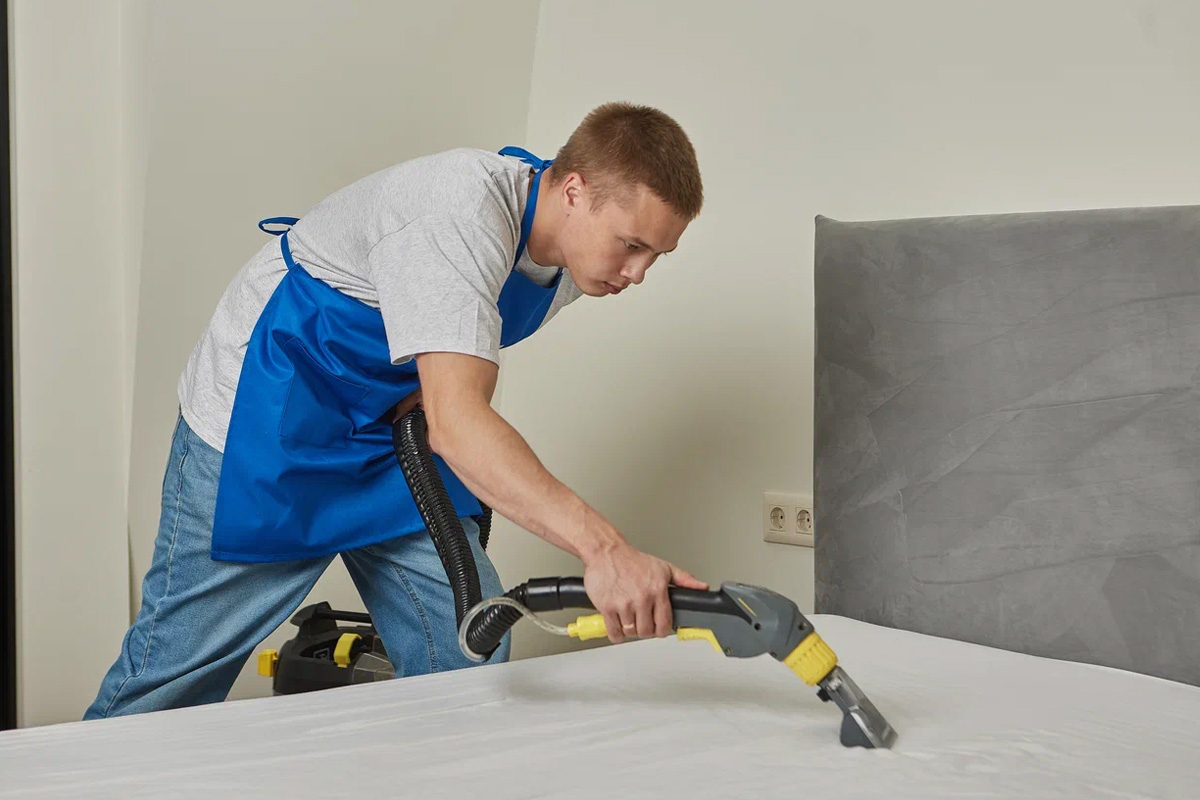
It’s usually not recommended. Mattresses dry slowly, and trapped moisture can cause mildew. If you use an extractor, use minimal water and ensure fast, complete drying.
What’s the best way to remove mattress stains without harsh chemicals?
For general mattress stains, start with mild dish soap and cold water, blotting gently. For odors, use baking soda. For urine, an enzyme cleaner is effective and often low-odor.
Why does my mattress still smell like urine after cleaning?
Odor usually lingers when urine penetrates deeper layers or wasn’t fully broken down. Re-treat with an enzyme cleaner, then use baking soda and allow extra drying time with strong airflow.
When should I call a professional mattress cleaning service?
Consider professional help if the stain is large, repeated (pet accidents), or if you suspect moisture reached inner layers. A deep extraction treatment performed by a professional mattress cleaning company can remove embedded dirt, allergens, and odors without over-wetting the foam.
Knowing how to clean a mattress comes down to three rules: act fast, use the right product for the stain (especially urine and blood), and dry thoroughly. Once the stain is handled, the baking soda method is a simple way to remove lingering odors and leave your bed feeling fresh.
To prevent future emergencies, consider adding a quality waterproof mattress protector—one small upgrade that can save hours of cleaning later.
Need Deep Mattress Cleaning Without the Risk?
If DIY methods didn’t fully remove stains or odors, professional cleaning can make a noticeable difference.
At CleanWhale, we use specialized extraction equipment designed for mattresses to remove deep-seated dirt, allergens, and moisture — without over-soaking delicate foam layers. It’s a safe option for urine accidents, old stains, pet odors, and regular deep refresh.
✔ Removes embedded dirt and bacteria
✔ Safe for memory foam and premium mattresses
✔ Fast drying process
✔ Convenient online booking
Book your professional mattress cleaning with CleanWhale today and enjoy a fresher, healthier sleep environment.