





















































The Waning Support or Growing Indifference: How Poland's Attitude Towards Ukrainian Refugees is Shifting

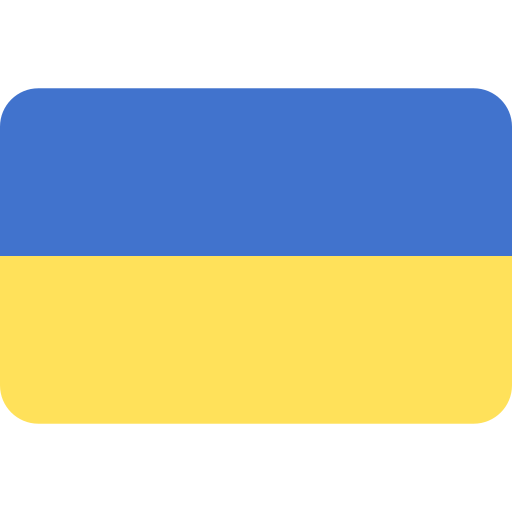
In recent years, Poland has found itself at the forefront of a significant humanitarian challenge: the influx of Ukrainian refugees. Once met with open arms and widespread support, a subtle shift in sentiment has emerged, raising essential questions about the future of Polish-Ukrainian relations and European unity. This article delves into the evolving attitudes of Poles towards Ukrainian refugees, shedding light on the socio-political factors, genuine concerns, and policy implications of this transformation.

Understanding the Context
Why the Initial Warm Welcome?
Poland, owing to its geographical proximity and historical ties with Ukraine, became a natural refuge for those fleeing conflict. In the initial stages, government initiatives and grassroots movements portrayed an image of solidarity, reflecting Poland’s long history of resilience and aid.
Waves of Change: Societal Dynamics and Realignments
As waves of refugees arrived, the Polish society found itself adapting, with public opinion wavering. The challenge of integration, resource allocation, and employment were pivotal in shifting the once favorable view.
Core Questions about Shifting Sentiments
What Statistics Reflect the Changing Attitudes?
Recent surveys reveal a decline in the percentage of Poles expressing positive sentiments towards refugees, with figures dropping from 60% in 2015 to 45% in 2023. Economic constraints and cultural differences are frequently cited reasons.
Are Socio-Economic Factors to Blame?
Many argue that economic pressures and competition for jobs have fueled resentment. Analysis shows a correlation between rising unemployment rates and a dip in public support for refugee policies, showcasing tensions linked to resource scarcity.
Actionable Insights: Building Bridges or Walls?
How Can Poland Rebalance its Approach?
Engagement Initiatives – Initiate community dialogues and cultural exchange programs to bridge gaps and foster understanding.
Policy Reforms – Advocates urge the government to reassess refugee integration policies and work towards equitable resource distribution.
What Role Does the European Union Play?
The EU is poised to offer financial aid and infrastructure support, aiming to alleviate the local economic strain and cultivate a spirit of alliance. Poland’s appeal for shared refugee responsibilities might pave the way for more sustainable solutions.
The Path Forward
Implications of Wavering Support
The evolution of Poland’s stance entails broader geopolitical ramifications. Continued decline in support could strain Poland’s diplomatic relations not only with Ukraine but also with the EU.
What Lies Ahead?
A collective effort to reinvigorate solidarity will be instrumental in navigating this complex socio-political landscape. Encouragingly, new waves of young activists and policymakers highlight a potential trend reversal, advocating for inclusive growth and mutual understanding.
Conclusion
In conclusion, the ongoing shifts in sentiment towards Ukrainian refugees in Poland serve as a reminder of the intricate interplay between societal attitudes and governmental policies. By acknowledging the challenges and proactively addressing them through empathetic policies and collaborative efforts, Poland can forge a future where humanitarian impulses are sustainably aligned with national interests. As this dynamic unfolds, it’s imperative for stakeholders across various sectors to engage constructively to foster unity and resilience for a united Europe.
This article aims to offer comprehensive insights into the complex dynamics shaping Poland’s stance, inviting readers to understand and empathize with the evolving societal landscape.